
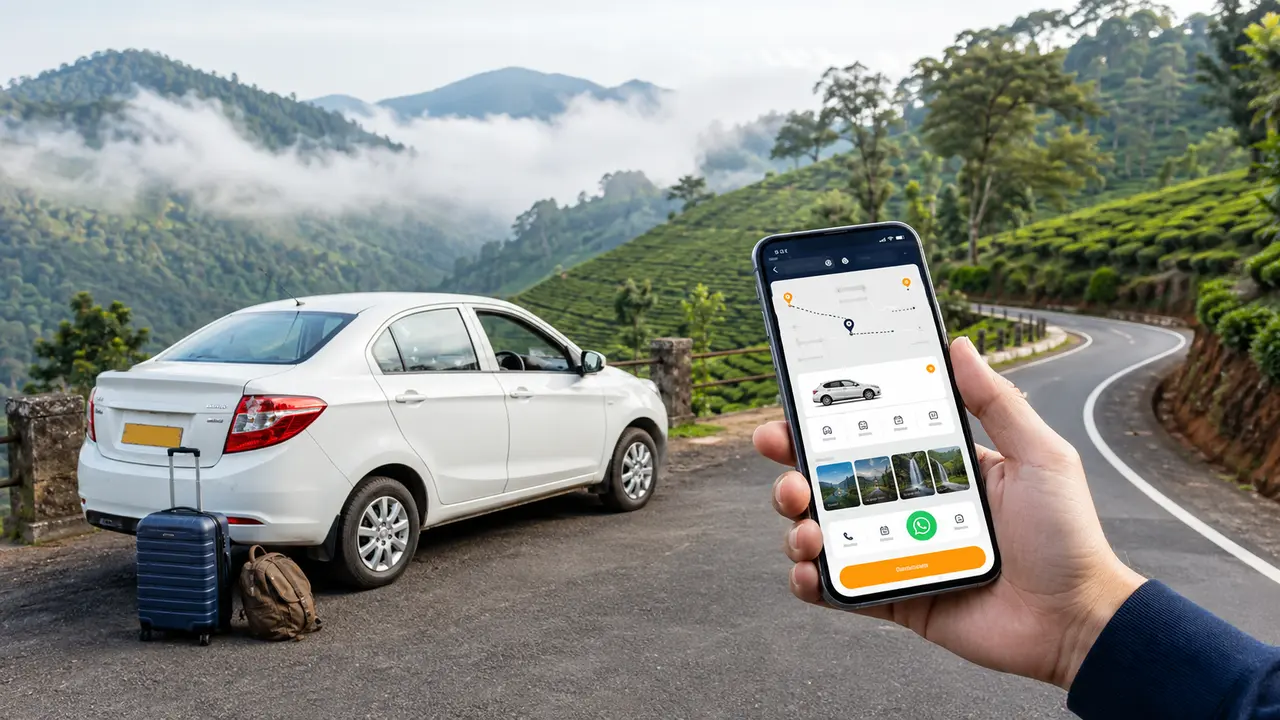
A tour or taxi website should reduce uncertainty before the customer calls. Travellers want to know whether you serve their route, which vehicle suits the group, what the price includes and whether the operator is genuine. A gallery and phone number alone cannot answer those questions.
Design around the traveller’s decision
Pickup, destination and route
Date, duration and timing
Passengers, luggage and needs
Fare basis, inclusions and extras
1. Separate the major service types
Create clear pages for services that solve different problems: Coorg sightseeing, airport pickup and drop, outstation taxi, local transfer, corporate travel or customised tours. Do not hide every service inside one long paragraph.
2. Create honest route and package pages
A useful route page explains pickup area, destination, approximate travel conditions, typical duration, vehicle choices, inclusions, exclusions and how the final fare is confirmed. A package page should show a realistic itinerary without promising that every attraction can be covered regardless of traffic, weather or opening hours.
3. Show the actual fleet
List vehicle type, passenger suitability, luggage considerations, air-conditioning and whether the displayed photo is representative or the exact vehicle. Avoid using luxury stock images when customers will receive a different class of vehicle.
4. Build a structured enquiry form
- Name and contact number
- Pickup place and destination
- Travel date and pickup time
- Number of passengers and children
- Vehicle preference
- One-way, round trip, sightseeing or multi-day requirement
- Special luggage or accessibility notes
Send the same information into a pre-filled WhatsApp message where possible. This reduces repeated questions and lets the operator quote accurately.
5. Explain pricing without creating confusion
If exact fares change, show “starting from” figures or explain the calculation method. State whether tolls, parking, driver allowance, interstate permits, night charges and additional kilometres are included. Place a date beside time-sensitive pricing.
6. Prove that the business is real
Display the registered or operating business name, working phone number, service area, original fleet photos, authentic customer feedback and clear booking policies. Provide the same core details on the Google Business Profile.
7. Answer Coorg-specific questions
Road conditions, Mandalpatti jeep requirements, seasonal weather, attraction timings and realistic transfer durations affect itinerary planning. Publish helpful guidance and keep it updated. Do not copy tourism descriptions that add no operational value.
8. Make mobile contact effortless
Most travellers will arrive from a phone. Use prominent call and WhatsApp actions, readable fares and compact forms. Sticky contact buttons can help, but they should not hide content or conflict with the browser interface.
9. Track meaningful conversions
Measure phone taps, WhatsApp starts and submitted forms, then connect them to actual bookings. Record which service page and campaign produced each lead where practical and privacy-respecting.
10. Include safety and policy information
Explain booking confirmation, advance payment, cancellation, waiting time, child-seat availability, driver details and emergency contact procedures. For online payments, publish the authorised account or method and warn customers about impersonation.
Recommended website structure
| Homepage | Primary services, trust, fleet and quick enquiry |
|---|---|
| Service pages | Sightseeing, airport, outstation and local travel |
| Fleet | Vehicle suitability and genuine photos |
| Packages/routes | Detailed intent-focused journeys |
| About/contact | Identity, location, policies and enquiry options |
Frequently asked questions
Should every route have a separate page?
Only important routes with enough original information and customer demand. Avoid hundreds of thin pages created by swapping place names.
Is WhatsApp enough for booking?
It can be the conversation channel, but the website should provide context and the final booking should clearly record fare, route, date, inclusions and policies.
Should fares be displayed?
Transparent ranges can qualify enquiries. If prices vary significantly, explain the factors and provide a structured quote process.
Can a small operator compete with aggregators?
Yes, by offering local expertise, clear service information, dependable communication and direct accountability—not by trying to imitate every aggregator feature.
Build a website that produces bookable enquiries
Eappsi develops tour and taxi websites with route pages, fleet presentation, WhatsApp journeys and local SEO foundations.